
Where to Buy Investment Property Australia 2026
Data-driven state-by-state comparison for Australian investors — rental yield, capital growth, stamp duty and holding cost across every state.
 Jonathan Zuvela
The best place to invest in property in Australia in 2026 is WA for yield-driven investors, QLD for infrastructure-led growth, and the Melbourne market for long term value at a relative discount on houses. This guide is designed for those interested in property investing in Australia, emphasizing the importance of research, market insights, and choosing the right locations. No single location is right for every buyer — where you invest depends on your yield needs, risk tolerance and personal goals. If you are also comparing personal ownership against super, see our guide to buying investment property with super. This guide helps you compare every region on the data points that drive real returns, so you can choose from the best investment property locations for your plan — whether you look at houses, units, or a mix.
Key takeaways on where to buy investment property in Australia
-
Higher rental yields on houses: WA (4.9%), NT (6.2%), regional QLD towns (5.1%–6.8%).
-
Strong growth: Brisbane and the SE QLD corridor, SA, regional NSW market.
-
Lowest entry prices: Hobart ($680K), regional VIC units ($410K), Darwin ($605K).
-
Most expensive market: Sydney median house price $1.48M — strongest long term growth record.
-
Rising areas for 2026: WA, Cairns, Western Downs mining region, Geelong.
-
Best region overall for 2026: WA on current metrics, QLD close behind.
-
Major cities remain important: While regional areas offer high yields, major cities still play a significant role for property investors due to their strong economic fundamentals and sustained demand.
How we rank the best investment property locations
Before deciding where to buy, most property investors assess a set of key indicators and factors that separate a smart investment decision from a dud. These essential criteria and key indicators drive long term value and show up again and again in the data we track across every market.
Essential criteria checklist for property investors
-
Gross rental yield — annual rental income divided by purchase price.
-
Median house price and median unit price — upfront cost and deposit size for houses in the area.
-
Capital growth — past price growth plus forward-looking growth drivers.
-
Vacancy rates — how fast the property generates income and how many renters compete for it.
-
Population growth — the main driver behind long term rental demand and rental income.
-
Infrastructure investment — major infrastructure projects uplift prices in surrounding suburbs.
-
Holding cost — state land tax, council rates, stamp duty on purchase.
-
Economic hub status — does the location have multiple industries, or a single industry that could wobble?
Other factors, such as local economic fundamentals and planned investments, should also be considered when making a decision.
Plug real numbers for any suburb into our rental yield calculator and stamp duty calculator before making an offer — a 5% yield on paper can collapse to 2.5% once holding costs are considered. PropBoss helps you model all of this against your budget before you commit.
State-by-state snapshot of the Australian property market
The table below brings together CoreLogic, Domain and ABS data on houses and units as at January 2026. Use it as your starting point to identify regions with strong growth potential, then drill into the state sections that follow for the detail behind each market.
| Region | Median house price | Median unit price | Gross rental yield | Vacancy rate | 12 months price growth |
|---|---|---|---|---|---|
| NSW (Sydney metro) | $1,480,000 | $815,000 | 3.1% | 1.4% | +4.2% |
| VIC (Melbourne metro) | $935,000 | $605,000 | 3.6% | 1.7% | +1.8% |
| QLD (Brisbane metro) | $895,000 | $615,000 | 4.2% | 1.0% | +9.6% |
| WA (Perth metro) | $765,000 | $510,000 | 4.9% | 0.7% | +13.4% |
| SA (Adelaide metro) | $820,000 | $545,000 | 4.1% | 0.8% | +8.9% |
| TAS (Hobart metro) | $685,000 | $510,000 | 4.4% | 1.9% | +2.1% |
| NT (Darwin) | $605,000 | $395,000 | 6.2% | 1.5% | +5.1% |
| ACT (Canberra) | $965,000 | $585,000 | 4.0% | 1.8% | +3.3% |
Yields and prices in regional markets usually beat the capital city figure — sometimes by a lot. We flag specific high-performing towns inside each region below.
Growth leaders: the WA, QLD and SA markets
Three markets are driving the price growth story in 2026: WA, QLD, and SA. All three share the same fundamentals — tight supply, low vacancy rates, strong population growth from interstate migration, and infrastructure projects lifting investor confidence across each area. These markets are attracting investors due to their strong capital growth potential, supported by robust infrastructure development and sound economic fundamentals.
Higher rental yields in Perth middle ring suburbs
Western Australia sits at the top of most 2026 watchlists for investors. Prices on houses remain affordable relative to the east coast market, the Western Australia economy is supported by mining, lithium, defence and infrastructure, and population has been growing above 2.7% annually.
What makes the WA market work right now:
-
Median house price $765K — under half of Sydney.
-
Gross rental yield 4.9% on houses — the best metro yield in the country, with Perth and regional WA offering strong rental yield opportunities.
-
Strong rental demand driven by interstate migration and skilled workers moving for jobs.
-
Hospital upgrades, the METRONET rail expansion and Westport all adding demand in surrounding areas.
-
Extremely low vacancy rates (under 1%) mean rapid leasing, with rents rising month on month.
Where to focus inside WA: Cannington, Bayswater and Belmont 10–20km from the Perth CBD offer the best balance of yield and capital growth on houses. Mandurah, Rockingham and Baldivis suit buyers looking for affordable entry prices and lifestyle appeal. Karratha and Port Hedland offer mining-driven yields (with higher risk and a smaller tenant pool). WA units in the inner rings are also moving, helping first-time buyers into the market.
For the full Perth breakdown see our investment property Perth WA guide.
Buy investment property in QLD for infrastructure-driven growth
Queensland is the region where infrastructure investment, population growth and lifestyle buyers converge. Brisbane, the Gold Coast and the Sunshine Coast all benefit from the 2032 Olympics build-out, and interstate migration from NSW and VIC continues to fuel Queensland rental demand. Major infrastructure projects, similar to how the Western Sydney Airport has boosted investment prospects in its region, are enhancing Queensland's long-term investment prospects by driving infrastructure-led growth and increasing buyer interest.
Why the QLD market stands out in 2026:
-
Brisbane median house price still under $900K with 4.2% yield.
-
South East QLD population tipped to grow by over 2 million people by 2046.
-
Cross River Rail, Gold Coast light rail stage 4 and Olympic venues lifting values in metro and coastal areas.
-
Regional QLD towns — Cairns, Townsville, Western Downs — offer 5%–7% yields on houses.
-
Vacancy around 1.0% — tenants are competing for rental properties in most suburbs.
Risks to weigh in QLD: land tax rules are important — the 2022 aggregation proposal was scrapped, but the policy keeps resurfacing. Model your exposure using our land tax calculator and read the QLD land tax guide before making a second Queensland purchase.
Best QLD areas: economic hub towns, middle ring suburbs, coastal markets
-
Brisbane middle ring suburbs: Wavell Heights, Stafford and Holland Park — 15km from CBD, with transport upgrades and an established lifestyle suburb profile.
-
South East QLD corridor: Logan, Ipswich and Moreton Bay — affordable entry prices with strong demand from young families.
-
Regional QLD economic hub towns: Cairns (tourism, defence, hospital upgrades) and the Western Downs (energy, gas, agriculture) for yield-focused investors. These areas are known for their steady growth and reliable rental demand, with real estate here delivering month-after-month cash flow.
-
Gold Coast and Sunshine Coast: lifestyle areas for retirees and remote workers; higher prices but steady long term growth on houses close to the beaches.
NSW: premium pricing, premium long term capital growth
New South Wales, and specifically Sydney, is the nation’s most expensive market, with a Sydney metro median house price north of $1.48M. Yields are thin (3.1% gross) but Sydney has delivered the strongest long term capital growth in Australia over the past 40 years, driven by population, limited new supply of houses and units, and global appeal. Investors are attracted to Sydney for its strong capital growth, making it a prime location for those seeking significant long-term property value increases.
Where buyers are focused in 2026:
-
Western Sydney: the Western Sydney Airport and Aerotropolis precinct is the single biggest growth driver in the country — Bradfield, Oran Park, Austral and Leppington benefit directly.
-
Inner and middle ring: Kogarah, Hurstville and Rockdale sit under $1.5M with proximity to transport and CBD jobs.
-
Regional NSW: Coffs Harbour, Newcastle and the Central Coast offer higher rental yields (4.5%–5.2%) with strong population growth and rental demand.
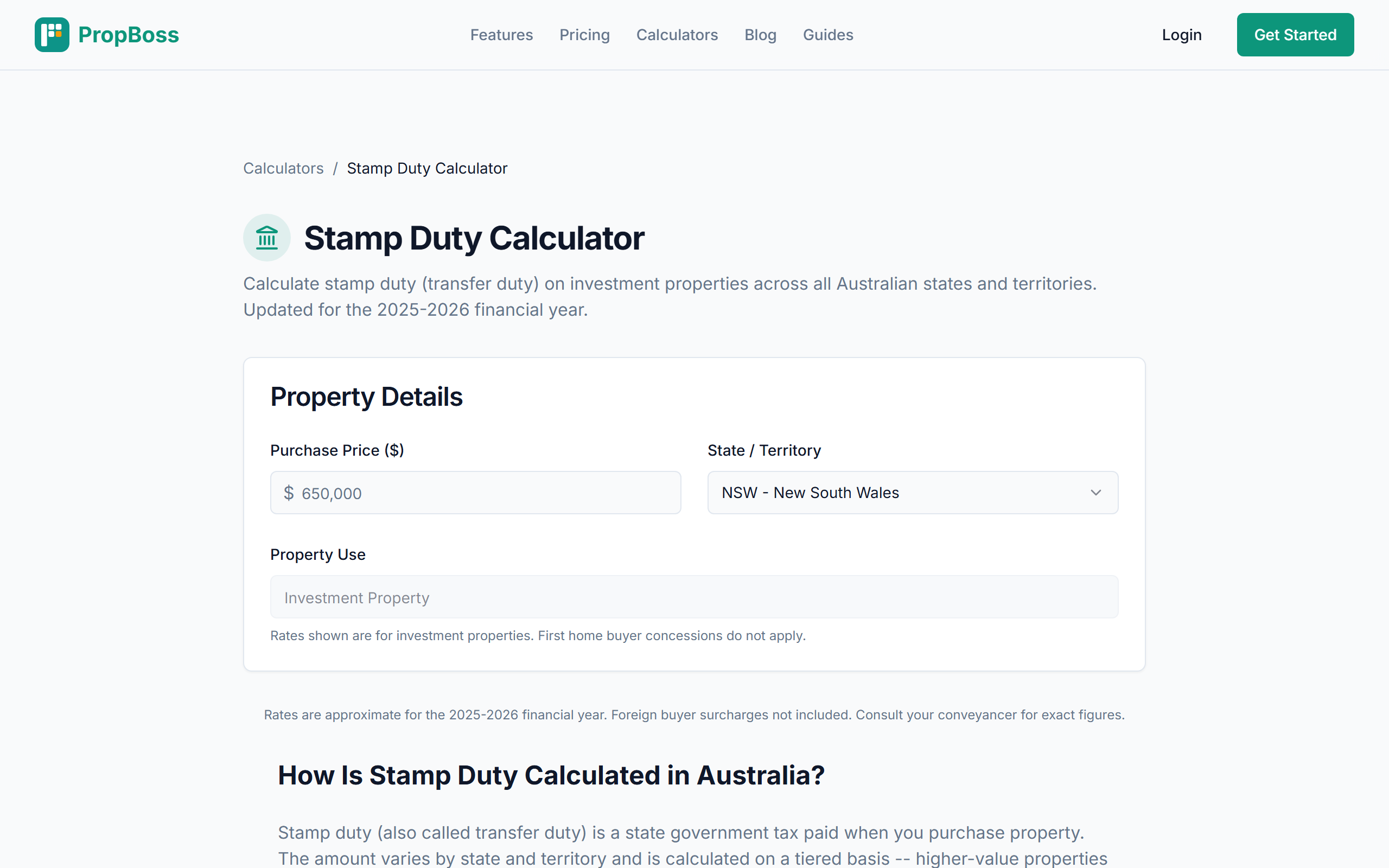
The reality check on NSW: stamp duty on a $1.3M property in New South Wales is around $60K — a major upfront cost that erodes the effective yield on the first year of rental income. Model your stamp duty using our stamp duty calculator and check Revenue NSW’s transfer duty page for current rates.
VIC: buying the value dip in Melbourne and regional Victoria
Victoria has underperformed for three years running — price growth has been flat to slightly negative across Melbourne metro, vacancy rates sit around 1.7%, and investor exits after the 2024 land tax increase pushed more stock onto the market. For contrarian investors, that’s the opportunity.
What’s driving the VIC thesis in 2026:
-
Melbourne median house price around $935K — a relative affordability story against Sydney.
-
Population growth remains strong; Melbourne is forecast to overtake Sydney by 2032.
-
New rail projects (Suburban Rail Loop, Metro Tunnel) are unlocking inner suburbs and urban renewal projects in brownfield areas.
-
Regional Victoria cities — Ballarat, Bendigo, Geelong — delivering 4.5%–5.0% yields with steady rental growth.
Where to buy inside VIC:
-
Reservoir, Footscray and Oakleigh 10–20km from Melbourne CBD — good transport access and growing amenity.
-
Regional cities with hospital upgrades, universities and strong education demand.
-
Lifestyle suburbs on the Mornington or Bellarine peninsulas for longer-horizon owner occupiers who plan to convert to rentals.
Local insight is crucial for identifying the best suburbs and opportunities in Victoria, as understanding specific market dynamics, infrastructure projects, and demographic trends can reveal growth areas that broader reports may overlook.
See the Victorian State Revenue Office land transfer duty page for the current stamp duty rates that apply to investors in Victoria.
SA: the quiet outperformer
South Australia has been the surprise story. Over 24 months the Adelaide market has delivered 8.9% annual price growth with a gross rental yield still around 4.1%. Affordability plus jobs growth in shipbuilding and renewable energy have pulled both lifestyle buyers and interstate investors into the SA market.
Why SA is on the list:
-
Median house price around $820K — still well below Sydney, Melbourne and Brisbane.
-
Very low vacancy (0.8%) indicating strong rental demand across most suburbs.
-
Major investments at Osborne shipbuilding precinct, the AUKUS pipeline, plus hospital upgrades and transport projects.
-
Migration from VIC and NSW for lifestyle and affordability.
-
Higher rental yields than most mainland cities on equivalent houses and units.
Where to buy inside SA: Plympton, Prospect and Payneham in the inner rings; Munno Para and Seaford on the outer growth corridor with affordable entry prices; Mount Gambier and the Barossa regionally for higher rental yields and steady tenants.
TAS, ACT and NT: the smaller markets
When considering where to buy investment property in Australia, it's important not to overlook the smaller markets such as Tasmania (TAS), the Australian Capital Territory (ACT), and the Northern Territory.
TAS: steady income, modest growth
TAS delivered the strongest five-year growth of any region from 2019–2022, then cooled. Hobart median house price is around $685K, yields on houses average 4.4%, and vacancy is higher than most capitals at 1.9%. Launceston and Devonport continue to attract investors chasing steady rental income rather than explosive growth.
ACT: stable, government-driven market
Canberra is a stable, government-driven market. Median house price is around $965K with yields near 4.0% and very low vacancy. Good for set-and-forget investors who want low drama and consistent cash flow — just bear in mind ACT land tax is levied on all rental properties regardless of land value, so holding costs are higher than most places.
NT: the highest rental yields in the country
Darwin is the outlier. Median house price $605K with a 6.2% gross rental yield — the highest yield of any Australian capital city. The tradeoff is that price growth over the past decade has been flat to negative and the local economy is reliant on defence, mining and tourism. Good for investors who understand the concentration risk and plan to hold for at least 10 years.
Capital city vs regional markets: which is better for your first investment?
This is the most common question we get from new investors. The honest answer is “it depends on your strategy,” but here’s how the numbers usually stack up across capital cities and regional markets:
| Factor | Capital city metro | Regional markets |
|---|---|---|
| Median price | Higher ($760K–$1.5M) | Lower ($400K–$700K) |
| Gross rental yield | 3%–5% | 5%–7% |
| Long term growth | Stronger and more consistent | Volatile — some regions boom, many flat |
| Liquidity | High — you can sell fast | Lower — smaller buyer pool |
| Vacancy risk | Lower | Higher if the area has a single economic hub |
| Tenant quality | Broader tenant pool | Depends on the town |
| Investment opportunities | Many investors competing | Fewer buyers, less competition |
Regional markets can generate excellent cash flow and higher rental yields, but they lean more heavily on a narrow set of growth drivers — a single mine closure or hospital downgrade can shift a local market sharply. If this is your first investment, most buyers’ agents advise starting with a capital city area and adding regional properties later as you grow your holdings.
Cash flow vs long term growth: which matters more?
Every investor has to pick a lane. The best places for cash flow — Darwin, regional QLD, regional SA — typically show weaker long term growth. The locations with the strongest long term value — Sydney, inner Melbourne, Brisbane — show thin yields and limited early income. A mixed portfolio often makes sense once you own more than one property, because the yield asset helps you hold the growth asset through quiet periods.
Cash flow priorities for investors
If your focus is cash flow — because you need the rental income to service the loan, or you want to retire on passive income — then look at these markets:
-
WA inner suburbs (5%+ yields on houses).
-
Darwin (6%+ yields but watch the long term value).
-
Regional QLD economic hub towns (Cairns, Townsville, Toowoomba).
-
Regional SA towns (Mount Gambier, Whyalla) — cheap houses with solid tenants.
-
Dual-income properties (duplex, granny flat) in any area.
Long term value priorities
If your focus is long term growth — building wealth over 15+ years — then look at these places:
-
Sydney Western Sydney Airport corridor.
-
Inner Melbourne suburbs (relative value on houses).
-
Brisbane Olympic corridor (infrastructure uplift).
-
Adelaide middle ring suburbs (compared to eastern capitals, a bargain).
-
Gold Coast beaches and Sunshine Coast lifestyle markets.
How to buy investment property in Australia: the research process
Whether you’re buying in WA, QLD or NSW, the research process is the same. Skip a step and you’ll pay for it at settlement or at the first tenant turnover. Here’s how experienced investors approach making a decision.
Step 1: Define your financial goals and personal goals
Are you chasing cash flow, capital growth, or a balance of both? Do you plan to refinance and pull equity forward in 3 years to buy again? Your goals decide which region and suburb make sense — not the other way round. Experienced landlords speak to a strategist or team before a single inspection.
Step 2: Set your budget and check borrowing capacity
Speak to a mortgage broker before you look at listings. Lenders treat investment loans differently to owner occupier loans, and rules change often. Factor in upfront cost (stamp duty, conveyancing, building and pest, LMI) plus the ongoing expenses on day one.
Step 3: Research data, prices, market and suburbs
Pull CoreLogic or Domain suburb data for the last 12 months and 10 years, check vacancy rates, median prices on houses and units, the local rental market, infrastructure pipeline, population growth and jobs. The ABS building approvals data is a useful leading indicator of future supply — a suburb with rising approvals is typically headed for a supply shift.
Step 4: Model the real numbers for each property
Open PropBoss and run the full feasibility — yield, income after tax, stamp duty, land tax, depreciation, negative gearing position. The headline yield on a property is almost never the number you keep. Compare several houses and units across your shortlist before making the call.
Step 5: Do your due diligence and only buy a great property
A poorly chosen property in a great location still underperforms a great property in an average area. Do your due diligence on the specific asset class: detached houses versus apartments, unit prices versus house prices, strata fees, body corp, flood and fire zones. Buy well or don’t buy at all — the market will offer plenty of future opportunities if you wait.
How PropBoss helps you pick the best investment property locations
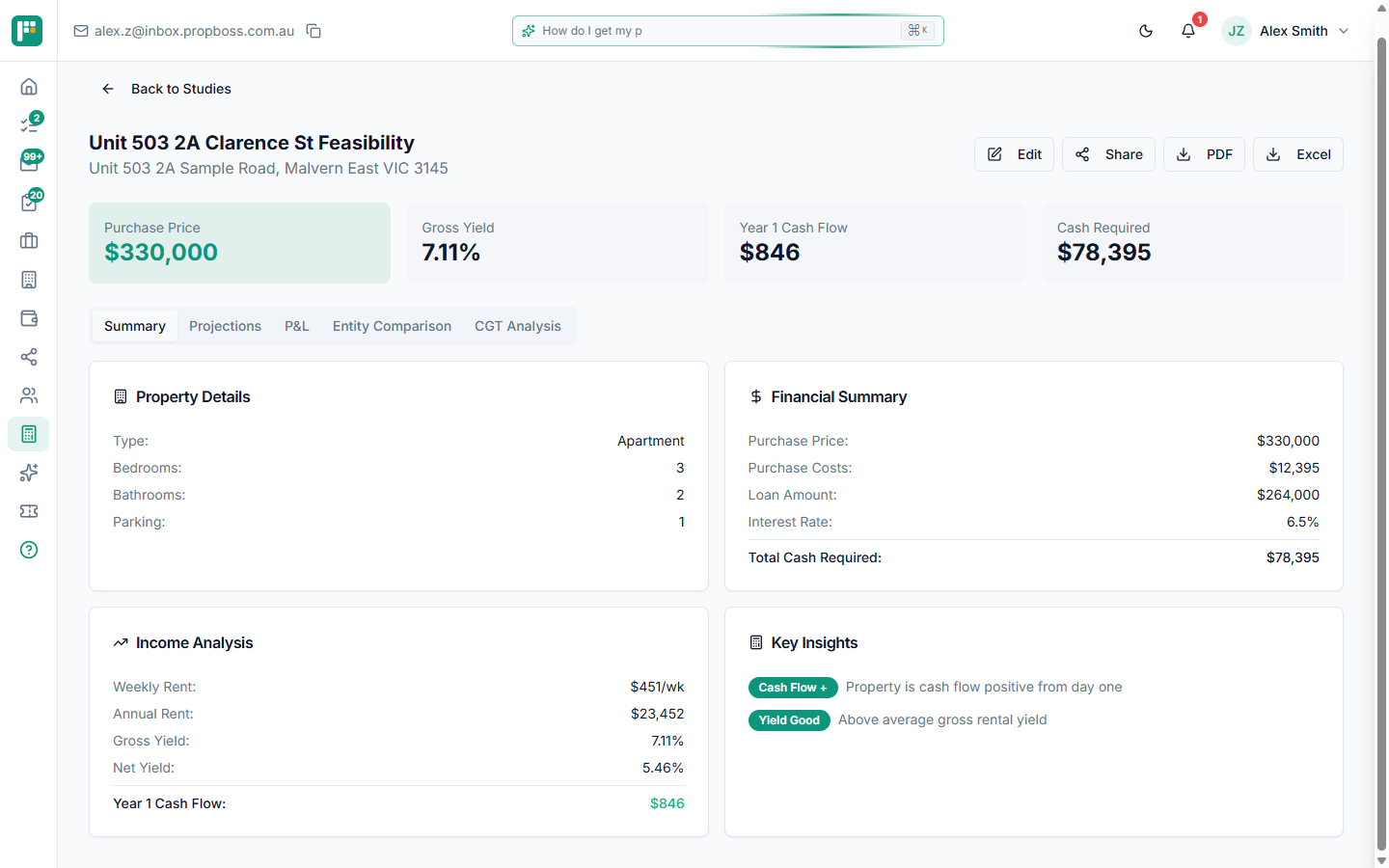
PropBoss is built by investors for investors. Once you’ve identified a shortlist of the best places to buy, use PropBoss to stress-test the numbers before making an offer on any property.
-
Feasibility projections: model the full 10-year cash flow on a property before you buy — including negative gearing, land tax and capital gains tax on sale.
-
Bank feeds: once purchased, connect each property to your PropBoss account — rental income, expenses and interest auto-categorise for EOFY.
-
Holdings view: see how each property contributes to overall performance — helpful once you move from a single investment to many holdings across regions.
-
AI insights: PropBoss helps you spot when cash flow drifts against your plan, so you can adjust before it hurts your returns. Updated monthly with fresh market data.
See what’s included on our features page or browse the full tools and calculators suite to model any location before you commit.
Frequently asked questions about where to buy investment property in Australia
What is the best state to invest in property in Australia?
For 2026, WA (Perth) leads on rental yield and near-term capital growth, while QLD leads on infrastructure-driven long term growth. The best region depends on whether you prioritise yield, growth, affordability or proximity — there is no single answer across all investor types.
Which capital city is best for property investment?
Perth and Brisbane are the two capital cities most often recommended for 2026 by buyers’ agents and property researchers. Perth offers the best rental yield among capitals (4.9%) while Brisbane combines 4.2% yield with an infrastructure-backed growth story through the 2032 Olympics. Sydney wins for long term capital growth but requires a much higher budget.
Is Brisbane a good place to invest in property?
Yes — Brisbane has been one of Australia’s best performing markets since 2020 and 2026 looks favourable. Strong population growth from interstate migration, low vacancy around 1.0%, Olympic infrastructure spend, and affordable entry prices compared to Sydney and Melbourne underpin the case. Focus on the middle ring suburbs or the SE QLD growth corridor.
Is Adelaide a good place to invest in property?
Adelaide has been a quiet outperformer, delivering around 8.9% annual price growth with yields near 4.1%. Shipbuilding and renewable energy jobs, plus interstate migration, are the key drivers. It is a smart entry point for investors priced out of Sydney or Melbourne.
Should I buy in Sydney or Melbourne?
Sydney has stronger long term capital growth and lower vacancy but requires roughly 1.5x the purchase price of Melbourne. Melbourne offers better yields, better affordability and meaningful upside if the current investor exit reverses. For first investment buyers, Melbourne is typically the easier market to enter.
Are regional properties a good investment in Australia?
Regional areas can deliver higher rental yields (5%–7%) and lower entry prices, but capital growth is inconsistent and you take on concentration risk if the local economy has only one or two industries. Regional investing works when you diversify across multiple properties, understand the economic hub of each town, and match the tenant pool to the property.
What is the cheapest capital city to buy an investment property in Australia?
Darwin is the cheapest capital at around $605K median house price, followed by Hobart at $685K and Perth at $765K. Darwin also has the highest gross rental yield of any capital at 6.2%, though capital growth has been weaker than other cities.
How much does stamp duty cost on an investment property in Australia?
Stamp duty is state-based and ranges from roughly 2.9% of the purchase price (TAS) up to 5.5% (NSW, VIC on higher brackets). On a $750K property the cost ranges from about $22K in WA to $30K in VIC. Use our stamp duty calculator to model the exact number for your region — it’s usually the single largest upfront cost after the deposit.
How do I choose between houses and units?
In most capital cities, houses deliver stronger long term capital growth because you own the land; units deliver higher yields and lower entry prices. For first-time investors with a limited budget, a well-located unit in an inner area can be a great starting point; for wealth building over 15+ years, detached houses on good-sized blocks usually win.
Track your property investment with PropBoss
Picking the right location is only the first step. Once you own the property, you need to monitor income, expenses, and the overall performance of your holdings so you can keep making smart decisions — whether to refinance, to buy again, or to sell and redeploy the equity.
PropBoss is the AI-powered platform built for Australian property investors. Bank feeds automate the expense tracking, tax-ready reports make EOFY simple, and the feasibility tool helps you model every future purchase before you sign.
Start your free PropBoss account and see how we track your investment property from settlement through to sale — or explore pricing to find the right plan. For more reading on growing your portfolio, see our complete guide to building a property portfolio in Australia.
Track Your Real Portfolio with PropBoss
Stop guessing with calculators and spreadsheets. PropBoss automatically tracks your rental income, expenses, bank feeds, depreciation, and tax position across your entire portfolio.

Jonathan Zuvela
Founder, PropBoss
Jonathan is an Australian property investor and the founder of PropBoss - an AI-powered platform that helps investors automate their property admin, track rental income and expenses, and make data-driven investment decisions.
Related Articles
Cash Flow Record Keeping Checklist Australia 2026
A practical checklist for Australian property investors to keep cash flow records accurate across rent, loan interest, recurring costs, repairs, and portfolio review.
Read more
Rental Property Record Keeping Guide Australia 2026
A practical rental property record keeping guide for Australian property investors, covering rental income, loan interest, repairs, capital improvements, portfolio review, and tax-time evidence.
Read more
Property Investment Record Keeping Checklist Australia 2026
A practical checklist for Australian property investors to keep rental income, loan, expense, tax, and portfolio records organised before tax time.
Read more